July 14, 2024
I thought I would share the happenings for each of my days to give a feel for what my routine is here (this is from the 2nd week in June):
Sunday: We walked to a church off station. About a 30 minute walk, Henry in a child carrier on my back. The service was about 2 hours, Henry can’t sit still that long so Abigail and I take turns walking around outside with him. We can still hear the sermon from outside. In the afternoon, we planted some more seeds in our garden behind our house. Some plants have started to sprout. Later, we attended a prayer circle to send off Olivia, who had served for the past 9 months as a teaching assistant at the school for the missionary kids. Bought lemonade from one of the Morris kids.
Monday: Get up around 6:20 as it’s getting light. Coffee on the back porch before Henry wakes up. Breakfast with Abigail and Henry. Five-minute walk to the hospital at 7:30 for Monday morning chapel. Round on surgery ward – about 25 patients total. Get updates from the weekend and I go to clinic. 31 new surgery outpatient consults – a mix of broken bones, breast cancers, a 12 year old girl with splenomegaly, and a myriad of other cases – some benign, some non-so-benign. One patient was a 6 year old boy who is being treated for tuberculosis and has a constrictive pericardial effusion – the sac around his heart is so full of fluid that he has right heart failure. He is short of breath and his liver is massively enlarged. He’s sick enough that I admit him and plan for a procedure the next day. Clinic ends an hour and a half later than usual due to so many new and complex patients. After dinner that evening, I read up on how to drain the pericardium.
Tuesday: same morning routine. OR cases started around 9:30. I perform a pericardioperitoneal window on the boy with the TB pericardial effusion – draining the heart sac into the abdominal cavity. It goes surprisingly smoothly. Next a sequestrectomy – removing dead bone from a girl’s tibia with chronic osteomyelitis (bone infection). Dr. Alex and I do an open surgery planning to resect a rectal cancer. We enter the abdomen and discover the cancer has spread to the liver – unresectable now. We give the patient a colostomy so the cancer does not eventually block her bowels. Finish in the OR around 3:00. Check in on the surgical ward. Most patients are doing well.
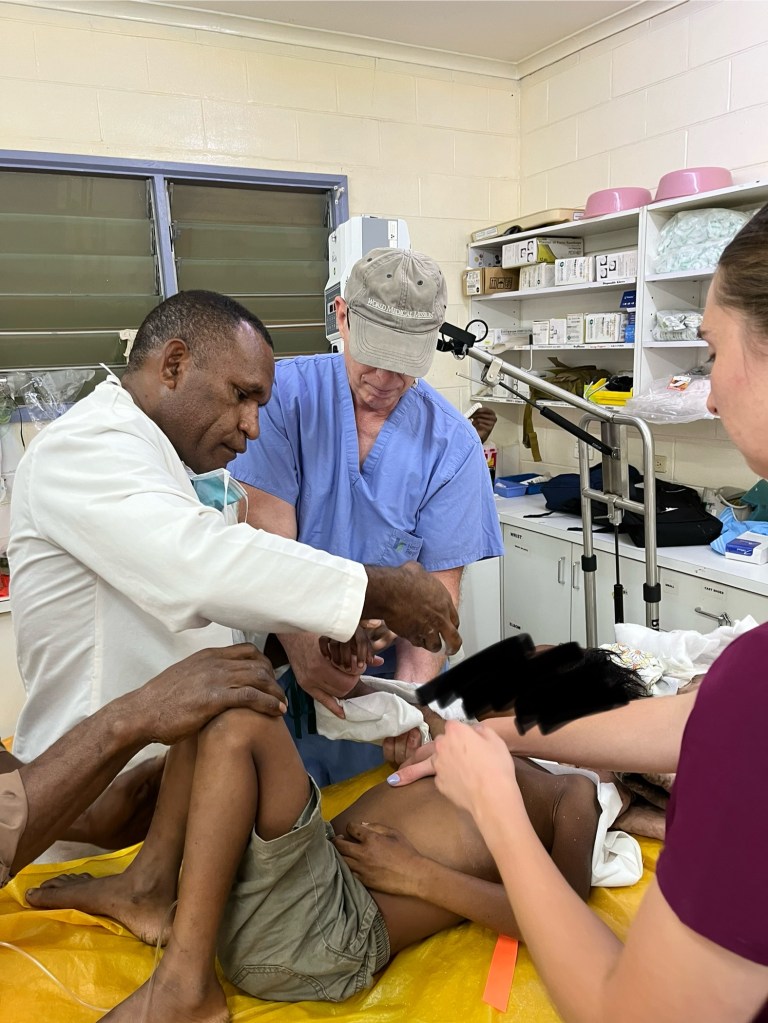
Wednesday: same morning routine. I go to follow-up clinic afterward. Many patient’s that I’ve operated on in the previous weeks return for wound checks, etc. I admit several patients for surgery the next day. I take a half day on Wednesdays. Work on some projects around the house. Go for a walk around station with Abigail and Henry after making dinner. Read up for cases the next day.
Thursday: Another scheduled OR day – another sequestrectomy to remove dead bone. Around 10:30 start a resection of a thigh sarcoma in a 13 year-old girl. She had it removed 3 years ago at another hospital, but it has returned and even larger this time. I anticipate 2-3 hours for the case. It takes me and Dr. Pyle 5 and a half hours. We have the peel the femoral artery and vein off of the tumor. The tumor bleeds like crazy. We finally get it out and get the bleeding to stop. I push back my last scheduled case to tomorrow. Leftovers for dinner. Bed time routine with Henry before my own.
Friday: Doctors’ meeting at 7:30. Rounds at 8:00. Bittersweet milestones. One 5 year old boy with squamous cell cancer of the mouth on whom I did a tracheostomy nearly 2 months ago finally gets to go home today! He’s responded remarkably well to our limited chemotherapy and his father is able to care for the tracheostomy at home. I’ll see him in clinic next week and he’ll receive another round of chemo at the end of the month. Another patient on whom I did a tracheostomy is not doing so well. He came in a week ago with massive neck swelling. We drained an abscess and secured his airway but he has never been alert since arriving in the emergency room. Maybe he had a stroke? Maybe meningitis? Hard to say with limited diagnostic tests. He hasn’t gotten better despite the strong antibiotics. Yesterday he aspirated and soon after his heart stopped. The team performed CPR but now he’s not breathing on his own. Clinical exam shows that he is brain dead. We have a discussion with the family and pray with them. Family decides to stop using the bag valve to inflate his lungs for him. Soon after, he dies. I go to the OR to do the case I pushed back from yesterday – a chest wall mass the size of a golf ball in an older man. Not sure of the pathology; seems benign. We’ll send the specimen to the US but it will take months to get the results. Home for lunch. Abigail made chai (“Friday Chai-Day”, as she calls it). I go to the maintenance shop to buy some metal fence posts in preparation of making a chicken run in our back yard. Mike and Nancy Pyle come over to visit after a hike with the ONU students. We twist their arms into staying for dinner. Henry loves the extra attention.
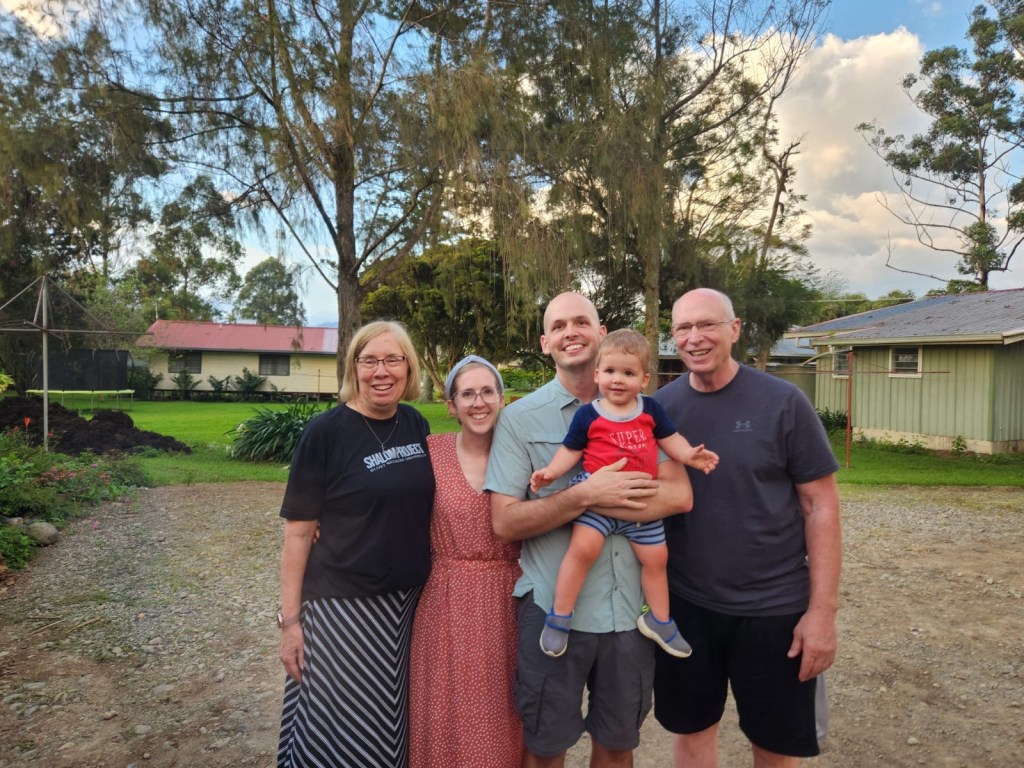
Saturday
I’m on call for surgery. I round on the surgical ward and check the other wards for new consults. Nothing too crazy. Nothing that needs to OR this morning. Abigail goes to a local SDA church with the team from Olivet and one of the interpreter with whom the team has been working. Henry goes along, thereby ensuring entertainment for the congregation. I work around the house and in the garden while Abigail and Henry are away. She comes back with bundles of fruit – probably 20 pineapples, a whole bag of oranges, bunches of sugarfruit, avocados, cucumbers, bananas, etc. It not unusual for local churches to give fruits and vegetables as a gift when missionaries visit their congregation, but this amount is incredible. We give away as much as we can, but still end up cutting up 10 or so pineapples and squeezing the oranges for juice.
So there you have it. This represents a fairly typical week. There’s a lot of routine, but there’s always some unexpected things that come up. For example: recently when I was on call, the ER called around 7 PM with with a 12 year old boy who got gored in the neck by a cow’s horn. It was in Zone 2 of the neck, where all the important things are, and given his large hematoma, he warranted a neck exploration. The wound was about 8 cm deep (I could fit my entire index finger in it) but amazingly missed his carotid artery, jugular vein, esophagus, and trachea. It takes a couple days for the swelling to go down, but he’s doing alright.
Another miraculous case happened on a night I wasn’t even on call. Dr. Sheryl, my senior surgery colleague, called at 4 AM because she needed another set of hands. A young man had come in shot in the upper portion of his abdomen – straight through. Sheryl had already stopped the bleeding from his liver, but there was still massive bleeding from behind the liver. We cross-clamped the aorta (the largest artery in the body) and clamped the blood supply to the liver, but the bleeding didn’t slow down at all. This raised our concern for a hepatic vein or retrohepatic inferior vena cava (IVC) injury. Our hospital is not equipped like a Level I trauma center in the US, but even if it was, retrohepatic IVC injuries are fatal the majority of the time. The patient’s very unstable and its hard to keep up giving him blood as fast as he’s losing it. After discussing options, we choose to pack his abdomen – literally packing 18 surgical sponges inside in an effort to stop the bleeding with pressure. We hope this will buy him enough time to be with his family before he dies (maybe a few hours) instead of dying alone in the OR.
To our amazement, he does not die. We don’t have an ICU where we can keep him on a ventilator. but he stabilizes over the weekend. But those surgical sponges are still in there – we can’t leave them forever. We take him back to the OR Monday morning (3 days after he came in shot) and remove all 18 sponges. There is no more bleeding. We optimistically watch him postoperatively. He gets stronger, eats, walks, and (most importantly) doesn’t bleed. Amazing. Venous bleeds can often stop with prolonged pressure, but the IVC and hepatics are very large. We tell him that he’s a miracle man and that God is watching out for him.
On a much lighter note, as I was discussing with the patient our plans to take him back to the OR to remove the surgical sponges, I made a sizeable language faux pas. The Tok Pisin work for cotton is “kapuk”, which is the word we use for surgical sponge. The word for tree kangaroo is only one letter different – “kapul”. So in attempting to explain that we had left 18 sponges inside to stop the bleeding and we now need to take them out, The conversation was actually “we put 18 tree kangaroos inside your abdomen and are going back to surgery tomorrow to remove them.”
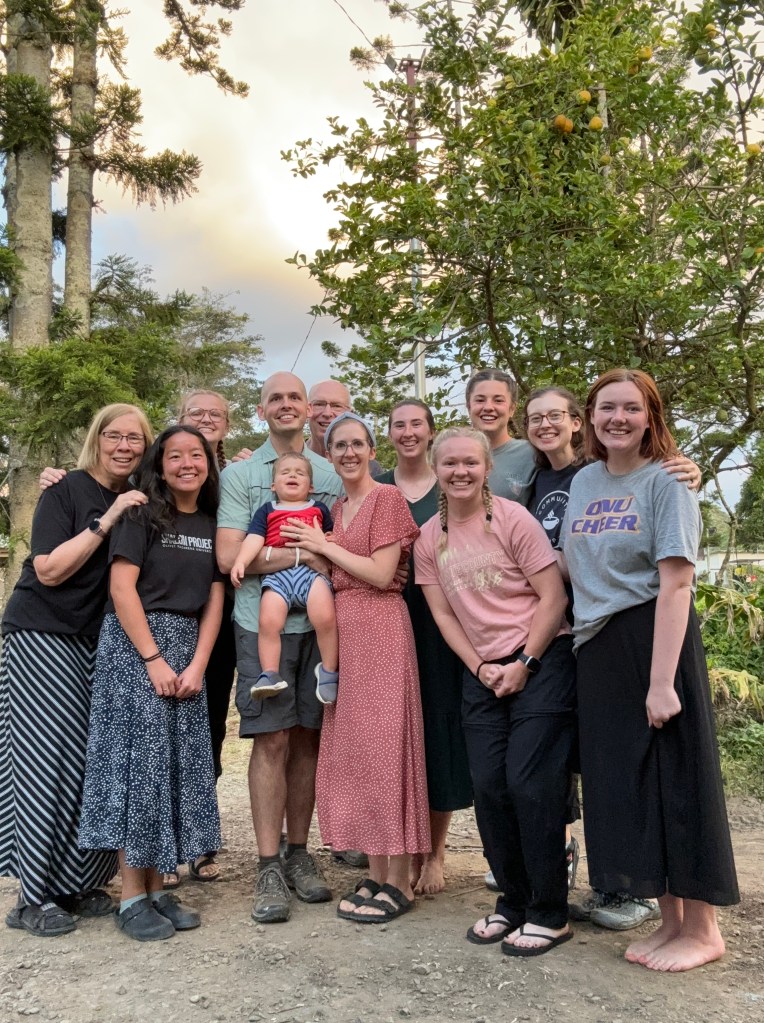


 Ginn Family Missions
Leave a reply to Bill and Marsha McCoy Cancel reply