by Marvin Helmker (Abigail’s dad), April 2025
My name is Marvin Helmker. I am the proud father of a missionary physician, Dr. Abigail Ginn, a pediatrician. Abigail’s husband and my son-in-law, Dr. Brian Ginn, a general surgeon, and their 2 ½ year old son, my grandson Henry, serve as missionaries at the Kudjip Nazarene Hospital in Papua New Guinea (PNG). My wife and Abigail’s mother, Shari, and I recently spent two weeks visiting the Ginn family on their mission station. As I write this, I am on a nearly 14 hour flight from Melbourne, Australia back to Los Angeles, California, then ultimately returning to our home in Michigan. With the permission of Drs. Abigail and Brian, I am writing this edition of their blog from what may be a patient’s perspective on a first-time ever visit to their local hospital for treatment. While much could be written regarding the terrain, culture, missionary station life, and other aspects of PNG, my focus of this blog is on the hospital and patient care.
Before I begin my focus on hospital operations (no pun intended), here are some facts about the PNG mission station at Kudjip:
- Located 5,000 ft. above sea level in the mountains of Jiwaka province, PNG
- Station established in the early 1960s by the Church of the Nazarene denomination
- Size of station: 250 acres
- Hospital established: 1967
- Hospital staff: 320, including physicians, nurses, chaplains, x-ray, surgical, pharmacy, housekeeping, and administration; most staff are PNG nationals
- Only hospital in Jiwaka province, size 2,981 square miles, population nearly 350,000 residents
- First hospital in all of PNG to be completely using electronic medical records (within the past six months); no more paper patient charts
- Additional station staff: 115, including maintenance, groundskeeping, and security
- Housing units on station: 193, including single family, duplexes, and quadplexes
- Nursing school on station with approximately 100-120 students; three years to complete
- Grades 1-12 school on station for missionary family students
What happens if I am a Jiwaka province resident and need to go to the hospital?
Call 9-1-1, an ambulance arrives with trained paramedics who treat and transport you on a 20 minute ride to the hospital? Absolutely not! No 9-1-1 or emergency ambulance service exists in the entire province. Whether barefoot or wearing sandals, you walk. How long does it take to walk to the hospital? Likely at least several hours, maybe up to several days, depending on how far you live from the hospital. The vast majority of PNG nationals do not own a car. Some have rarely had the opportunity to ride in a car. Walking is the primary mode of travel. If you have enough money, you may be able to hire a local private transportation vehicle to take you on part of your journey. These vehicles are 14 passenger vans or 25-30 passenger buses owned and operated by private citizens. Vehicles are routinely packed to well over seating capacity. No money to catch a ride? Keep walking. Be mindful of the fact that the total area of the Jiwaka province is nearly 3,000 square miles. If you live in an area even 35-40 miles from the hospital, how long will it take you to walk there in a mountainous region with very few improved roads if you have a leg injury, are pregnant and approaching the time to give birth, or have any number of other conditions which may make walking difficult?
When I arrive at the hospital, what happens next?
Approach the security guard at the entry gate. If your condition is an emergency, the hospital emergency room is open 24/7/365 and the guard will let you in the gate. If your condition is not an emergency, stand at the gate or take a seat on the ground. The guard will let patients in one at a time to register and be triaged (sorted) by a staff member to determine the order in which they are seen by a physician in the non-emergency clinic. This clinic is much the same as a family practice office in a developed nation. If arriving after hours to be seen, wait at the gate until the clinic opens for regular weekday business hours.
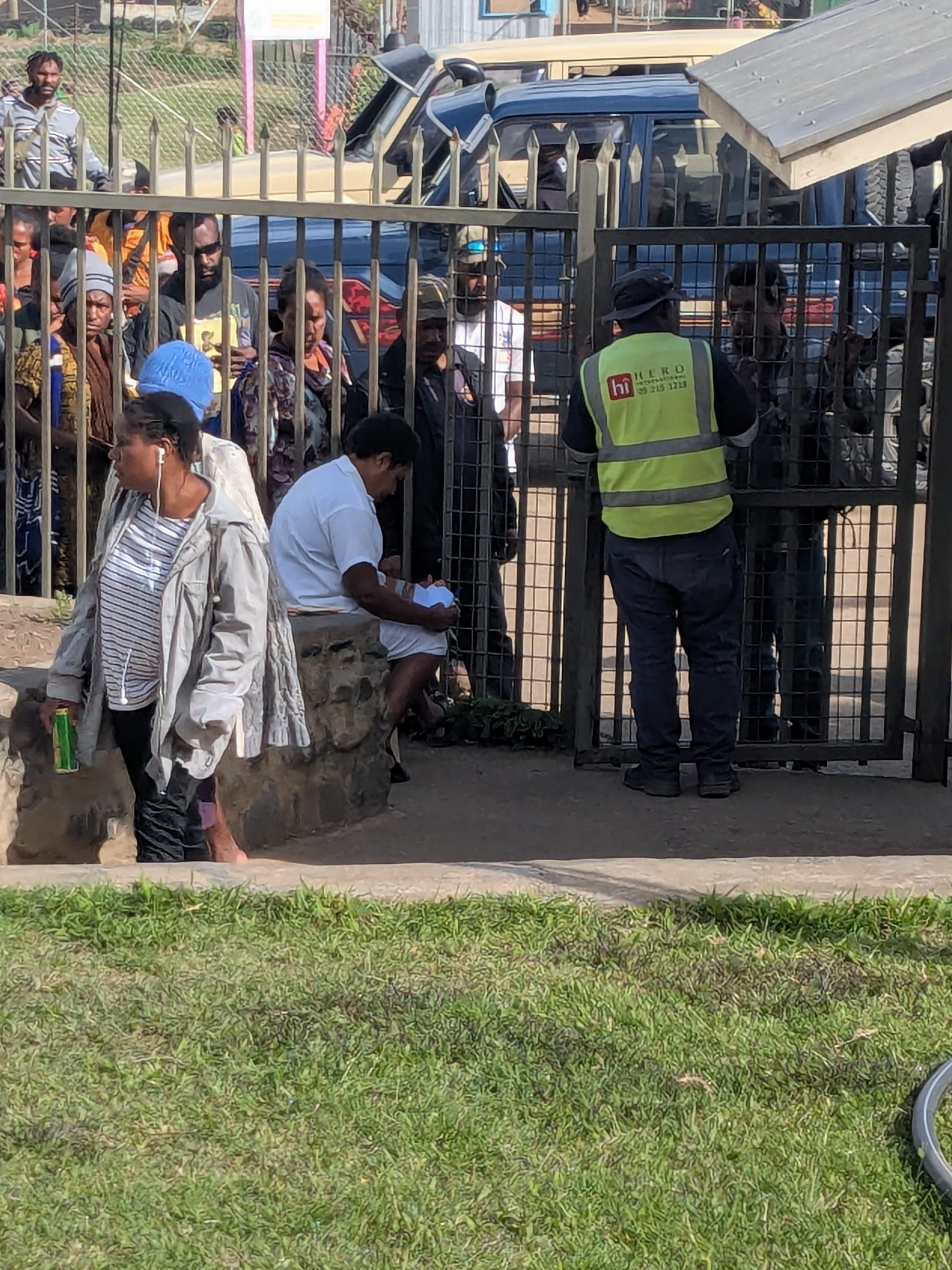
I forgot to bring my health insurance card with me. Can I still be treated?
This is not a problem as there is no health insurance available. All patients pay fees depending on the hospital services needed. Unless you are a patient in need of immediate life-saving care, all fees are due prior to treatment. Some examples of fees: x-ray, ultrasound, or electrocardiogram-20 kina, the national currency of PNG (equivalent to $5 U.S.) Clinic visit: child-5 kina ($1.25 U.S.), adult-12 kina ($3 U.S.) Emergency room: child-20 kina ($5 U.S.), adult-54 kina ($13.50 U.S.) Major surgery (appendix, gallbladder, hernia, etc.)-200 kina ($50 U.S.) If it is determined that your injuries are the result of a domestic violence situation and you are a male, add an additional 240 kina ($60 U.S.) to the emergency room or surgery fee listed above. Because fights between tribes occur within the province, if your injuries are the result of such an event, add 1200 kina ($300 U.S.) to the emergency room or surgery fee listed above. Do you get the sense that the hospital is committed to reducing the number of injuries within the region due to fighting?
What if I can’t afford to pay the required fees for treatment?
Contact your family members to request financial assistance. Just as in first world nations, many PNG nationals have a cell phone, even in such a remote area as where the hospital is located, so contacting family by either word of mouth or cell phone is common. Families tend to be multi-generational and very large, so coming up with the required funds is generally not an issue. For a family member who may have access to a banking account, an ATM machine is available a short distance from the hospital. Some good news: once you have paid the initial fee(s) determined for your care, no additional fees are charged regardless of if you need additional surgeries or how long you remain a patient in the hospital. Occasionally, patients remain hospitalized for weeks or even months. Once care is completed and you are discharged from the hospital, it is the expectation of your family that you will likewise contribute financially to the future medical care of a fellow family member.
If I need to be admitted and stay in the hospital, what should I expect?
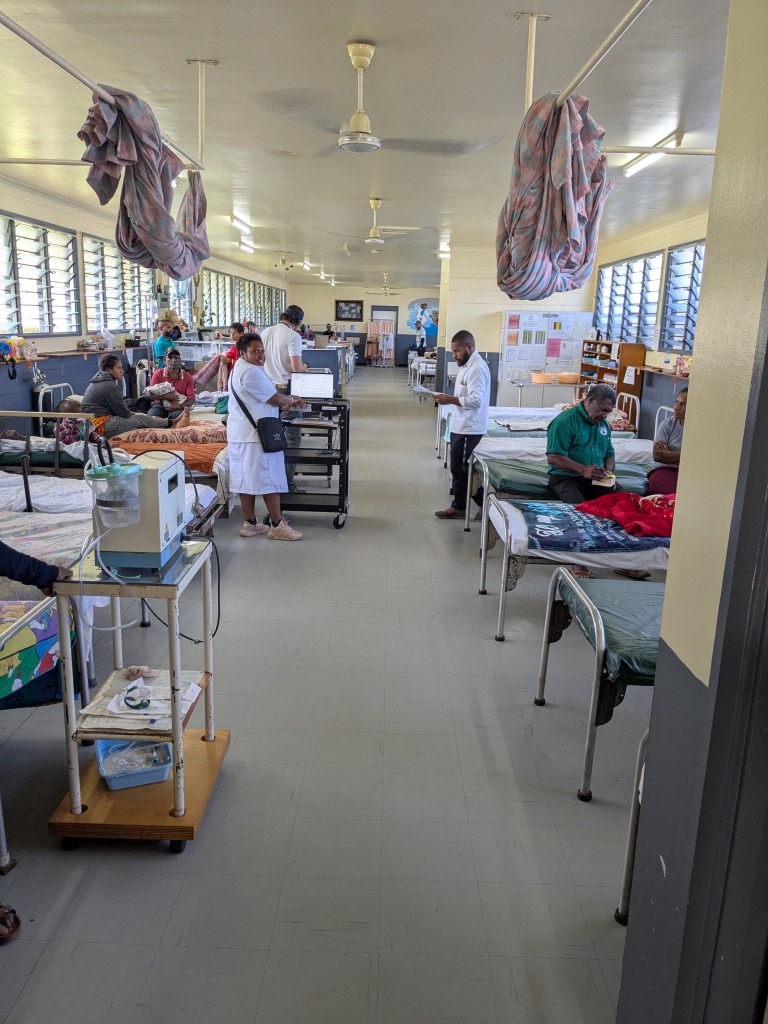
You will be admitted to one of four wards: pediatrics, medical, surgical, or obstetrics. Each ward holds approximately 30 patients. If you don’t wish to be housed in a ward, please see the photo below for private and semi-private room options.
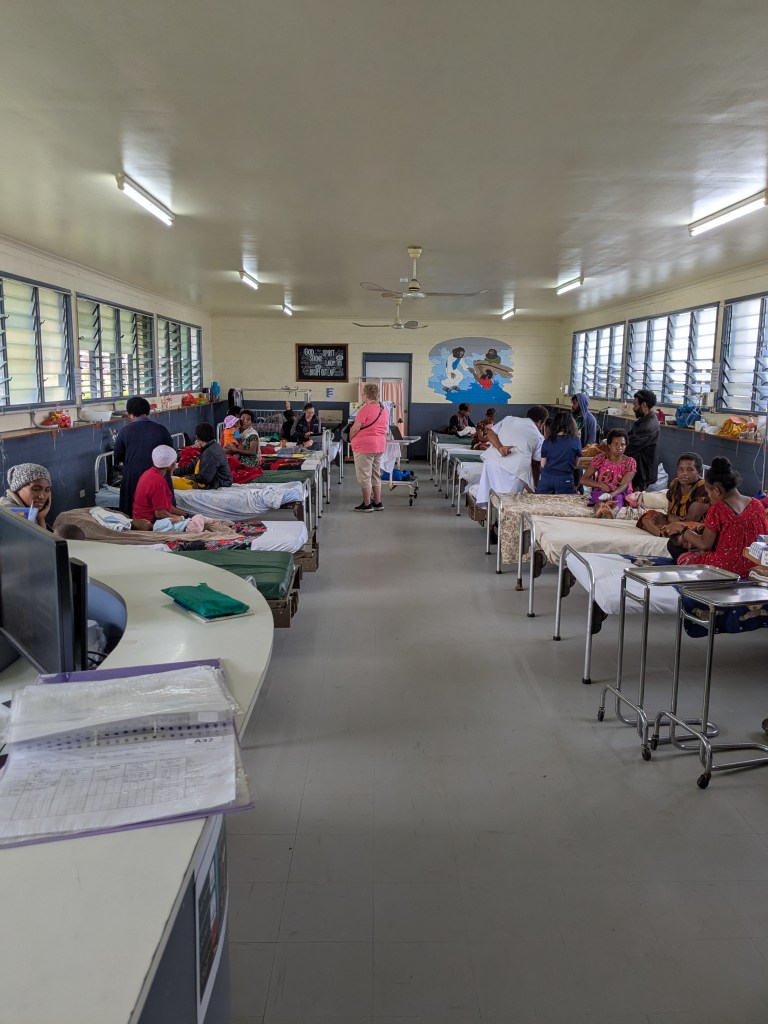
Oh, you don’t see photos of private or semi-private rooms? That’s because no such rooms exist. Remember, you are in a third-world country. Beds in the ward are 2-3 feet apart, and the family of the patient is required to provide bed linens if the patient wishes to have them.
With beds so close to each other, what about patient privacy?
Privacy is rare, if not outright impossible on the ward. Just the same as in developed nations, physicians complete rounds on patients in the wards each morning. Rounds include a review of nursing notes on each patient, examining the patient to determine their current condition, and then updating the patient’s treatment plan and medication needs. Because beds are very close to one another, it is common for the patient in the bed next to you or their family member to be listening with interest to the doctor’s conversation with you. The person next door may even feel the desire to express his/her opinion on your medical condition or treatment. What about the Health Insurance Portability and Accountability Act (HIPAA) laws in PNG, which protect a patient’s privacy rights and health information? There are no such laws.
What is a watchman?
A watchman is a person who watches over you during your hospital stay. This person is usually a family member and can be female or male. Depending upon a patient’s length of stay, a new watchman is welcome to arrive to replace a current watchman, but a watchman always remains with the patient 24/7. Because nursing staff are busy providing medical care to patients, and due to the fact that no traditional hospital meal service is provided, the watchman is responsible for providing and preparing food for their patient, helping the patient change their clothing, and washing and drying the patient’s clothing as needed. An outdoor community kitchen, complete with firepit, is available for food preparation. Also available is an outdoor washtub with running water to wash clothes and clotheslines to hang washed clothes to dry. A canteen is located next to the hospital which sells a variety of food items, much in the same style as a miniature convenience store. Instead of having your watchman prepare your food, would you rather order from a local restaurant menu and have your food brought to you by one of the popular delivery services? Nice thought, but forget it! No such restaurants or delivery services are available.
Final thoughts
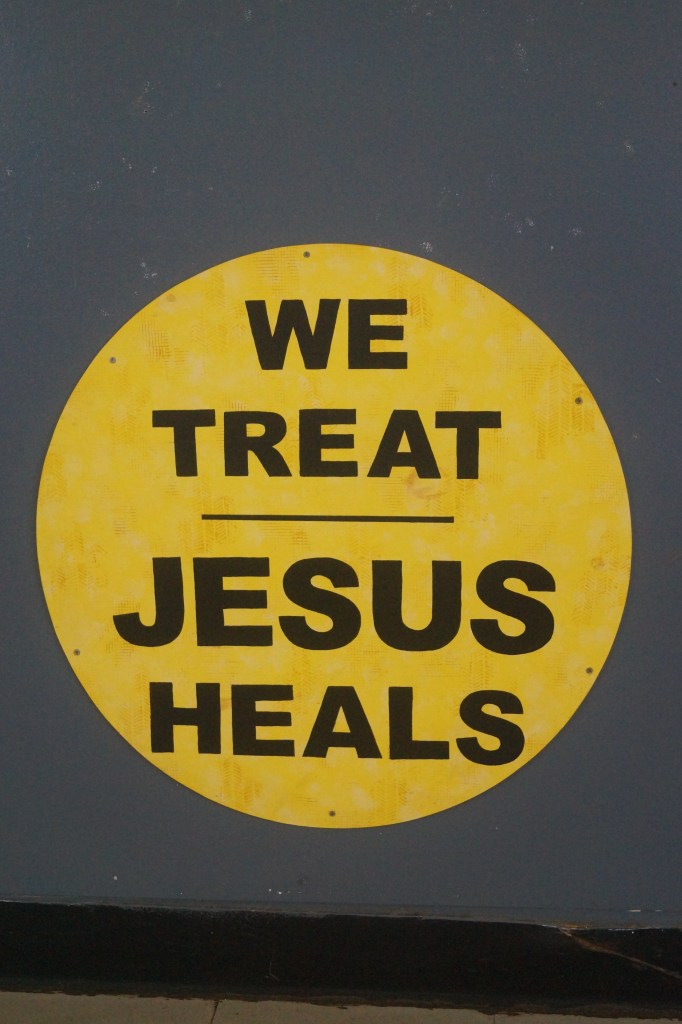
The message “We Treat, Jesus Heals” is prominently displayed throughout the Kudjip Nazarene Hospital. After two weeks and multiple hours of observing a variety of activities throughout the hospital, I left with a sense of complete confidence that patients are well cared for. Chaplains and physicians offering words of encouragement and praying with patients is commonplace.
Each of the missionaries I met, whether they are at Kudjip long-term or visiting on a short-term assignment, are dedicated to helping the people of the remote Jiwaka province. Whether you support this mission station with your prayers, finances, or donations of equipment and supplies, your assistance is greatly appreciated. I am grateful for the skilled care that the sick and injured receive, most of whom would have no other options for medical care if this hospital did not exist.


Leave a Reply